
Across Nigeria on Monday, October 5, teachers were celebrated as nation-builders, mentors and the people responsible for shaping the country's next generation.
From Abuja to Lagos, Ekiti, Oyo, Adamawa, Kebbi and Anambra, governments, teachers' unions, education officials and community leaders marked the 2026 World Teachers’ Day with awards, promises and renewed calls for better welfare and working conditions.
The national theme, “Standing with Teachers: 60 Years of Protecting the Profession, Advancing Its Status and Shaping Our Futures,” provided a common thread running through the various celebrations.
But beneath the ceremonies was a remarkably consistent message that Nigeria's teachers need more than praise. They need practical support.
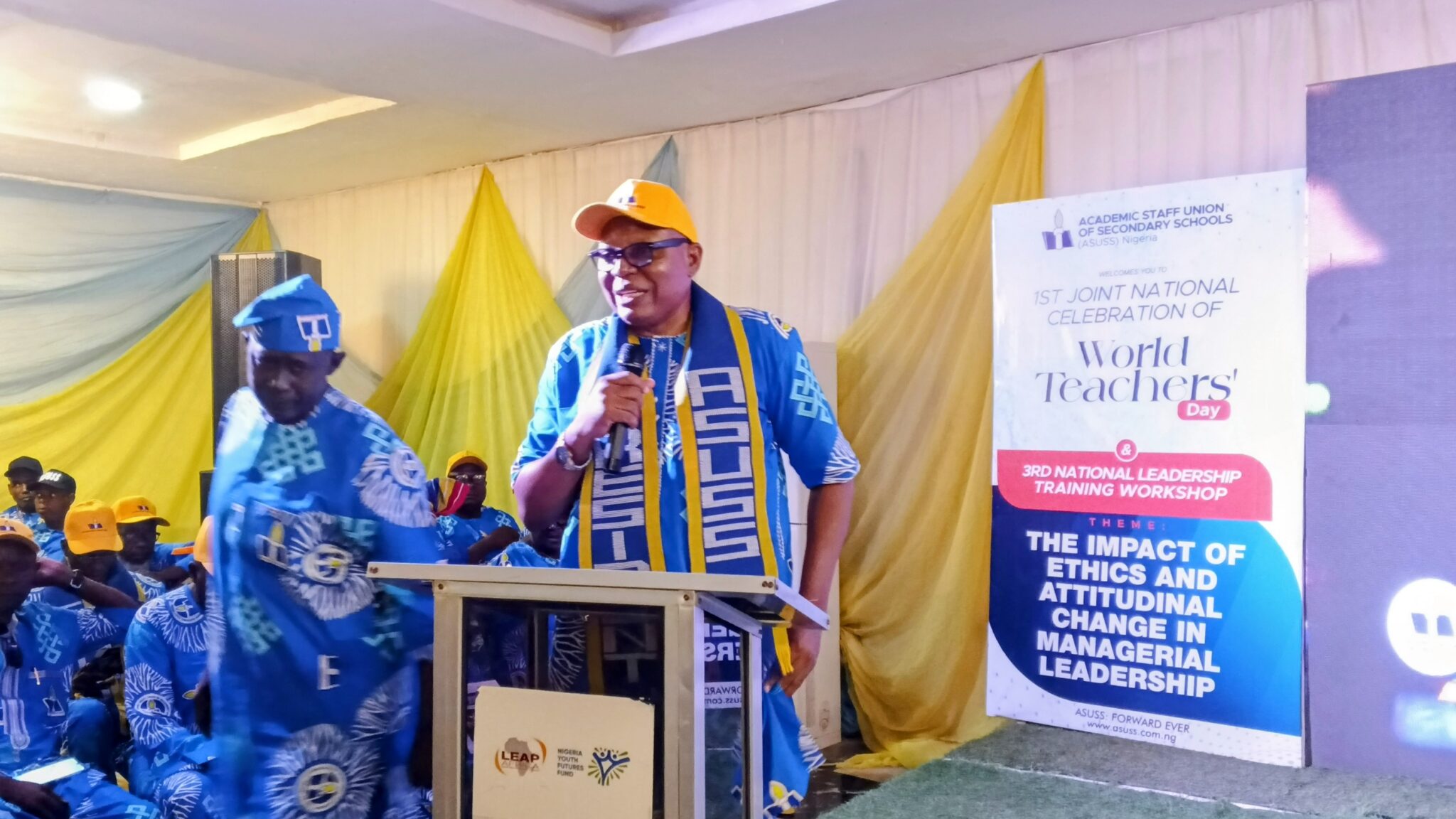
In Abuja, the Academic Staff Union of Secondary Schools (ASUSS) called for a dedicated housing scheme for teachers in the FCT, saying high housing costs have forced some educators to commute from distant areas or, in extreme cases, sleep in school classrooms. The union linked teacher welfare directly to the strength of education and, ultimately, national stability.
At the national level, ASUSS went further, demanding a Special Teachers’ Salary Structure to recognise the unique demands of the profession, reward experience and qualifications, and make teaching attractive enough to retain and recruit talented Nigerians. The union also called for better training, rural posting allowances, improved learning environments and greater involvement of teachers in education policy.
In Adamawa, the emphasis was on numbers and access. Governor Ahmadu Fintiri said the state had recruited 5,000 teachers and planned to employ another 3,000, while also highlighting free education, examination-fee payments, classroom construction and the development of model schools. Teachers there, however, still called for further promotion exercises, training and the renovation of teachers’ quarters.
Ekiti offered another side of the picture. Governor Biodun Oyebanji distributed N70.5 million to outstanding teachers and announced a series of education interventions, including ICT laboratories, internet facilities, school rehabilitation, security measures and the recruitment of more than 5,500 teachers over four years. Yet teacher unions reminded the government that celebrations must go beyond a single day and that outstanding welfare commitments still need to be fulfilled.
In Kebbi, the Nigeria Union of Teachers praised Governor Nasir Idris for improved remuneration, teaching aids, classroom construction, renovation and teacher recruitment, while recognising the resilience of teachers working through difficult economic conditions.
Oyo's celebration carried a more sombre dimension. The state NUT honoured teachers and learners affected by the May 15, 2026 attack in Oriire Local Government Area, recognising survivors and supporting families of teachers who were killed. At the same time, the union demanded stronger implementation of the Safe School Programme and improvements in teacher welfare and career progression.
Oyo also highlighted practical measures aimed at getting more children into school. Governor Seyi Makinde's administration distributed 33 motorcycles and 72,000 notebooks to school support and mobilisation officers, with the stated aim of identifying out-of-school children, increasing enrolment and reducing dropouts.
Lagos focused on professionalism, integrity and the broader responsibility of society towards teachers. Governor Babajide Sanwo-Olu called for better rewards and incentives, including possible housing support, while stressing that teachers' contribution should be measured not merely by examination results but by the doctors, engineers, entrepreneurs and other citizens who emerge from their classrooms. Education officials also called for modern laboratories, smart classrooms, internet access, professional development and greater teacher participation in policy and curriculum decisions.
In Anambra, the message was more reflective. Dr Nonye Soludo described teachers as nation-builders whose influence extends across generations, emphasising their role in shaping character, nurturing talent and inspiring young people.
But perhaps the most striking message came from Federal College of Education (Technical), Akoka, where Provost Dr Wahab Azeez argued that Nigeria needs substantially greater investment in education and that teachers should receive remuneration that reflects the importance of their work.
NAPTAN similarly called for better pay, housing, incentives and continuous professional development, particularly in digital skills as artificial intelligence and other technologies transform education.
Taken together, the events across the country tell a remarkably similar story.
Nigeria knows what teachers mean to its future.
Governments say teachers are indispensable. Unions call them nation-builders. Politicians praise their sacrifices. Education officials speak about their role in producing every other profession.
But the demands coming from teachers themselves are equally clear: better pay, decent housing, safer schools, modern facilities, professional development, career progression and genuine participation in decisions affecting education.
Theis is the real challenge beyond the speeches and ceremonies.
World Teachers’ Day may provide an opportunity to celebrate teachers but the condition of the profession cannot be measured by the number of goodwill messages issued on October 5.
It must be measured by what happens after October 5.
Because, as the national ASUSS president put it, teachers do not need appreciation alone; they need action.
As Nigeria continue to celebrate its teachers every year.
If the country genuinely believes that teachers shape its future, then how Nigeria treats its teachers today will ultimately determine the quality of that future.
