
The Federal Government is seeking Norway’s help to track down illegal fishing operators accused of exploiting Nigerian waters, depriving local fishermen of their livelihoods and costing the country valuable revenue.
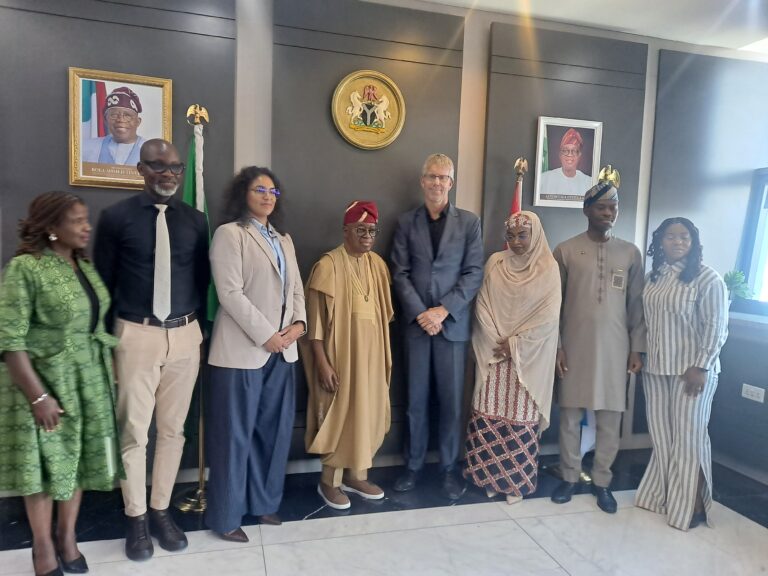
The Minister of Marine and Blue Economy, Adegboyega Oyetola, disclosed this on Monday in Abuja when Norwegian Ambassador to Nigeria, Svein Baera, visited him to discuss cooperation in maritime surveillance and fisheries management.
Oyetola said some foreign operators allegedly harvest fish illegally from Nigerian waters, rebrand their products and return them to Nigeria for sale at high prices.
He said the government is ready to join Norway’s Blue Justice Initiative, which uses satellite-based vessel tracking to identify suspicious maritime activities and strengthen action against illegal, unreported and unregulated fishing.
According to the minister, illegal fishing threatens fish stocks, undermines the livelihoods of local fishermen and deprives Nigeria of legitimate economic benefits. He said improved surveillance and intelligence sharing would help authorities identify suspicious vessels and enforce fisheries regulations.
Baera said Norway was introducing the initiative to Nigeria as a practical way to improve maritime monitoring and cooperation against illegal fishing and other crimes at sea.
He explained that the programme’s Ocean Surveillance Programme provides participating countries with satellite-based Automatic Identification System (AIS) data, allowing authorities to monitor vessel movements and investigate suspicious activities.
A Norwegian Embassy official, Michelle Hovi, said the programme offers real-time and historical vessel-tracking information covering up to three years, alongside technical guidance, training and intelligence sharing. She said more than 40 countries were already participating.
Norway also expressed interest in helping Nigeria develop its aquaculture and fish-farming sectors. Baera invited a delegation from the ministry to explore areas of cooperation, including technology transfer and training.
However, important questions remain about Nigeria’s participation. The announcement did not establish whether the country had formally joined the initiative or when the surveillance arrangement would become operational.
There are also questions about which Nigerian agencies will analyse the data, how suspected offenders will be investigated and whether the information will lead to arrests and successful prosecutions.
With this initiative, Nigeria may soon have better information about what is happening in its waters. The question is whether the authorities will have the capacity and determination to act on it.
Norway is providing surveillance expertise, not necessarily prosecuting offenders itself.
