
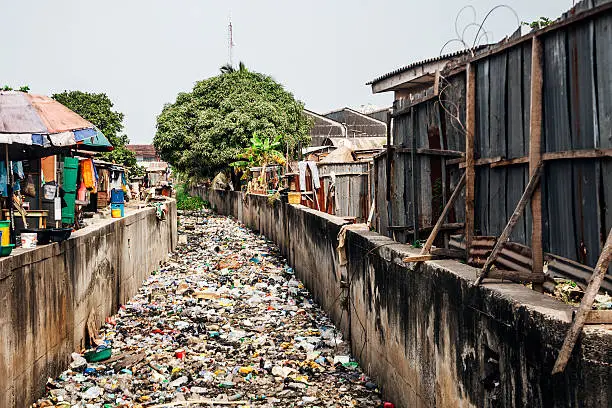
Olusosun gets another intervention as Lagos asks, how many emergencies does it take to remove one pile of refuse?
Lagos has declared another emergency.
This time, the enemy is not COVID-19, fuel scarcity or traffic. It is the old Lagos favourite: refuse.
Governor Babajide Sanwo Olu on September 9 declared what he called a “small state of emergency” on waste management after piles of rubbish returned to parts of the state and waste trucks reportedly spent hours waiting at disposal sites.
The governor made the declaration during an inspection of the Olusosun dumpsite in Ojota and immediately ordered 160 new compactor trucks, more waste receiving points and a restructuring of the Lagos Waste Management Authority, LAWMA.
He also told LAWMA officials to leave their offices and face the streets, roads and dumpsites.
“Waste is outside on the street, it is not in their offices,” Sanwo-Olu said.
That, perhaps, is the shortest job description LAWMA has received in years. The governor also warned residents to stop dumping refuse on roads, highways and drainage channels, threatening prosecution through mobile courts. Businesses and premises creating environmental nuisances could also be sealed.
The problem is that Lagos has been here before.
And before.
And, if rubbish could vote, it might already have a permanent constituency in Lagos.
Since 2019, the Sanwo-Olu administration has bought trucks, rehabilitated dumpsites, strengthened enforcement and introduced several initiatives to improve waste collection.
In 2021, LAWMA commissioned 102 new waste trucks and 100 double Dino bins. The agency has also entered agreements with private-sector operators to improve household waste collection.
Yet, somehow, the rubbish keeps returning like a politician during election season.
In May 2026, the state said 931 people had been arrested for environmental offences, while 239 facilities had been sealed and 1,711 contravention notices issued.
Still, illegal dumping remains widespread.
So the question is no longer whether Lagos has a waste policy. It has plenty.
The question is, why does the rubbish appear to have better staying power than the policies?
LAWMA and the politics of waste:
There is an uncomfortable chapter in the story. In 2020, the Sanwo-Olu administration ordered an audit of LAWMA following allegations of fraud involving some contractors.
PUNCH reported that some contractors were politicians and that allegations included inflated wage bills for street sweepers and supervisors. The newspaper reported that the government was paying more than N560 million monthly to contractors, while an audit allegedly uncovered payments involving ghost workers and non-existent contractors.
Some contracts were subsequently terminated.
LAWMA said the audit exposed unethical practices and that affected contracts were being terminated to improve efficiency and protect public funds.
The Centre for Anti-Corruption and Open Leadership also called for investigations by the EFCC and ICPC, alleging that some operators were political loyalists.
Those allegations should not be stretched into a claim that all LAWMA contractors or officials are political appointees. But they do raise a question that the latest restructuring should finally answer: Is Lagos paying for waste management or merely managing the payments?
There were also reports of thousands of alleged ghost workers, prompting further questions about how much of the money allocated to waste management actually reached those doing the work.
Who is actually working?
This may be the most important question facing the new LAWMA restructuring. If Lagos is spending huge sums on waste management, residents should not need a detective to find out where the service went.
The state should be able to account for its workforce, contractors, salaries, responsibilities and administrative costs. After all, a waste-management agency should ultimately be judged by what residents see outside—not by how many people occupy desks inside. Sanwo-Olu's instruction that more LAWMA workers should move from offices to the streets therefore deserves attention.
Because rubbish, unfortunately, does not respond to memos.
Residents are not entirely innocent, they cannot escape responsibility either. Many still dump refuse indiscriminately, throw waste into drainage channels or patronise unapproved collectors who eventually dump it at illegal sites.
LAWMA has taken offenders to court. In July 2026, an Oshodi Special Offences and Mobile Court convicted 16 people for environmental offences, sentencing each to four months in prison for offences including indiscriminate dumping and failure to patronise assigned PSP operators.
In March, seven others were arraigned over alleged illegal dumping and assault on LAWMA enforcement officers. So the mobile courts are not merely part of the governor's speech. They are already in business.
The bigger question is whether enforcement will be fair, consistent and applied to everyone.
There is, however, a limit to prosecution. A resident who has paid for waste collection cannot reasonably be expected to turn the living room into a temporary dumpsite because the collector has stopped coming.
Sanwo-Olu himself acknowledged that some PSP operators have failed to perform. The state says it will review the system and remove operators that cannot meet their obligations.
This may be the most important part of the new intervention. Residents have a duty not to dump rubbish illegally. But government and its appointed operators also have a duty to collect the rubbish they are paid to collect.
One cannot simply leave Lagosians with two choices, keep the refuse in
the house or put it on the highway.
Lagos definitely needs an emergency exit. The latest emergency should therefore be more than another grand clearing exercise followed by another grand return of the rubbish.
Lagos needs enough trucks, functioning disposal sites, efficient transfer stations and properly supervised PSP operators. It needs accountability within LAWMA and consequences for officials and contractors who fail. Anyone who diverts public money should face the law, political connections notwithstanding.
And residents who deliberately dump refuse illegally should also face the consequences. But the ultimate test of this “small state of emergency” is not whether Lagos can clear today's rubbish.
It is whether six months or one year from now, the governor or his successor, will need to declare another emergency over the same rubbish.
At this rate, Lagos may soon need an emergency just to manage its emergencies.
The state does not need another temporary clean-up.
If LAWMA is cleaned up, Lagos will become cleaner.
It needs a waste management system that works and keeps working after the cameras leave Olusosun.