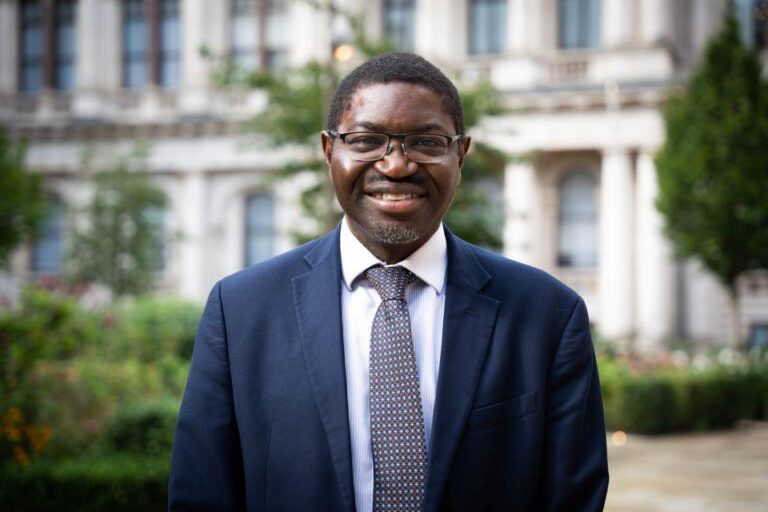
Akande, a dual British-Nigerian national and professor at the University of Oxford, emerged victorious during elections conducted simultaneously by the UN General Assembly and Security Council on Tuesday, November 3, 2026.
His election marks Britain's return to the 15-member court after almost nine years without a British judge.
The election involved nine candidates competing for five vacant positions. Akande was among four candidates who secured the required majorities in both UN organs during the first round of voting.
He received 11 votes in the 15-member Security Council, surpassing the eight-vote threshold required for election. The fifth position was settled after additional rounds of voting, with Kenya's Professor Phoebe Okowa eventually securing the seat.
The other successful candidates were François Alabrune of France, Mahmoud Daifallah Hmoud of Jordan and Rena Lee of Singapore.
Akande's election has attracted attention in Nigeria because of his academic and professional roots in the country.
He obtained his Bachelor of Laws degree from the then University of Ife, now Obafemi Awolowo University, in 1992 before qualifying as a Nigerian barrister and solicitor in 1993.
He subsequently earned a Master of Laws degree from the London School of Economics in 1994 and built an international career in legal scholarship and practice.
He is currently the Chichele Professor of Public International Law at the University of Oxford, a Fellow of All Souls College and a member of the United Nations International Law Commission.
His professional experience includes advising governments and international organisations, as well as appearing as counsel, adviser and expert before international courts and tribunals, including the ICJ.
The British Government actively supported Akande's candidacy, with his nomination attracting 43 endorsements from national groups across different UN regions, the highest number received by any candidate in the election.
Britain's Justice Secretary, Alex Norris, had presented the country's case before the General Assembly on October 29, highlighting Akande's legal expertise, independence and experience in international law.
Following his election, the Foreign, Commonwealth and Development Office described the development as a major achievement for Britain's commitment to international justice and the rule of law.
Akande said he was honoured by the confidence placed in him and pledged to discharge his responsibilities independently and impartially, applying international law faithfully.
The International Court of Justice, headquartered in The Hague, Netherlands, is the principal judicial organ of the United Nations.
It adjudicates legal disputes between sovereign states and provides advisory opinions on legal questions referred to it by authorised UN institutions.
Unlike the International Criminal Court, which prosecutes individuals, the ICJ deals primarily with legal disputes involving countries.
Although Akande holds Nigerian nationality and received his initial legal education in Nigeria, his election was secured as the United Kingdom's candidate.
Importantly, ICJ judges do not represent their countries of origin or the governments that nominated them. They exercise independent judicial responsibilities.
Akande and the four other newly elected judges will begin their nine-year tenure on February 6, 2027.