
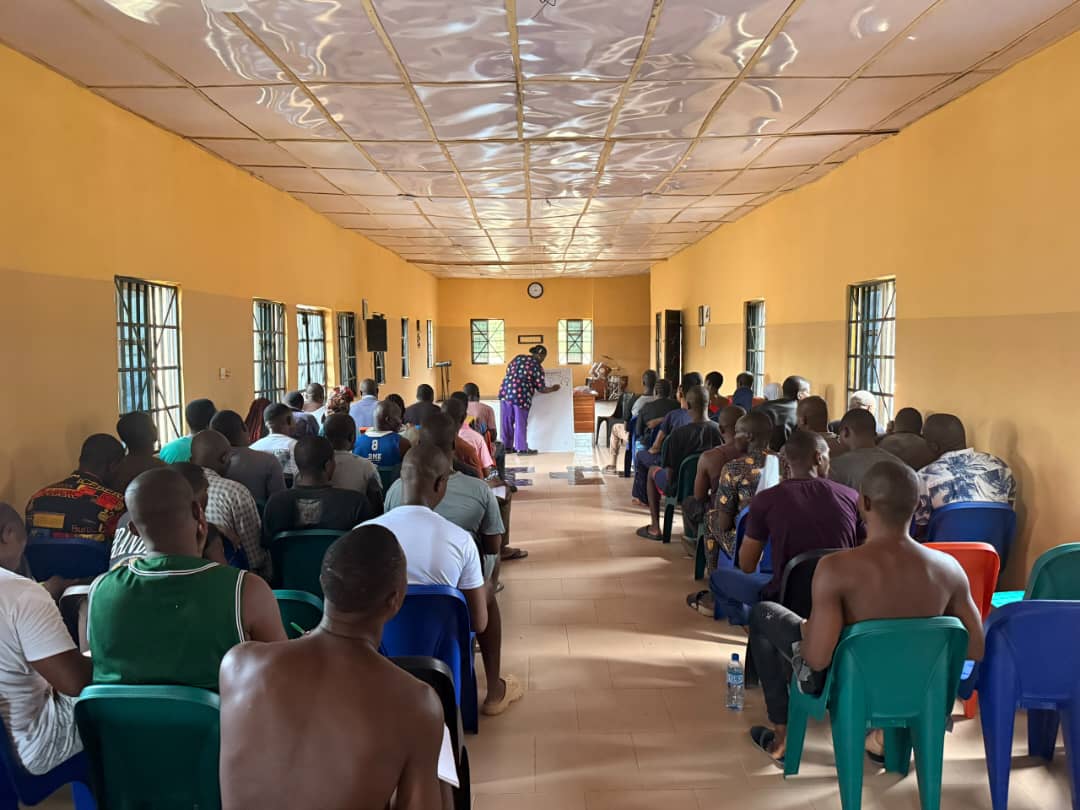
While the government continues to arrest drug traffickers and seize illegal substances, the country's rehabilitation facilities remain inadequate, poorly funded and beyond the reach of many families.
A treatment programme that costs between ₦300,000 and ₦400,000 monthly can put recovery out of reach for ordinary Nigerians, particularly when patients may need at least three months of care. Some require treatment for up to a year.
Prof. Taiwo Obindo, a consultant psychiatrist and former President of the Association of Psychiatrists of Nigeria, raised the concern in an interview with the News Agency of Nigeria (NAN).
He identified inadequate facilities, a shortage of trained personnel and rising medication costs as major obstacles to effective treatment.
The financial burden is particularly worrying for families who must pay for accommodation, medication and other services while supporting relatives undergoing rehabilitation.
The scale of the problem becomes clearer when compared with the available treatment facilities.
In January 2026, a report by 'The Guardian' estimated that Nigeria had about 14.3 million people abusing illicit drugs but fewer than 200 treatment centres. It also questioned the ability of many existing facilities to provide specialised addiction treatment.
The Federal Government had earlier cited a World Health Organisation estimate of 14.4 million Nigerians using drugs.
These figures point to a serious public health challenge. However, drug use does not automatically mean addiction or a need for residential rehabilitation. The nature and severity of each person's condition determine the treatment required.
The National Drug Law Enforcement Agency (NDLEA) has also acknowledged the importance of rehabilitation.
In October, its Chairman, retired Brig.-Gen. Buba Marwa, disclosed that the agency had treated 53,843 people at its 31 rehabilitation facilities across Nigeria over five years.
Marwa argued that arrests and drug seizures alone would not solve the problem, particularly when underlying issues such as depression, trauma and other mental health conditions remained untreated.
He called for more psychiatrists, psychologists, counsellors and community health workers, as well as the integration of mental healthcare into primary healthcare facilities.
Just 90 rehabilitation beds for Lagos!
The situation in Lagos illustrates the pressure on existing facilities.
Dr Olugbenga Owoeye, Medical Director of the Federal Neuro-Psychiatric Hospital, Yaba, told NAN that the hospital had only 90 beds dedicated to drug rehabilitation.
Of these, 60 are for male patients and 30 for females.
The hospital has three consultant psychiatrists and about eight resident doctors providing daily care.
Although the male rehabilitation unit was recently renovated with an ECOWAS grant, Owoeye said the available beds were insufficient for a city with an estimated population of 22 million.
The hospital has also introduced occupational activities to help patients develop practical skills during treatment.
Its facilities include computers, musical instruments, a barber's salon, fashion-design equipment and a gymnasium.
Owoeye said such activities were important because rehabilitation should prepare patients to return to society, earn a living and become independent rather than simply help them stop using drugs.
He appealed to non-governmental organisations, corporate bodies and other institutions to support the government in expanding rehabilitation services.
Beyond the shortage of facilities and high cost of treatment, experts are also concerned about how some rehabilitation homes manage their patients.
Veronica Ezeh, Executive Director of Adicare Rehabilitation Home and a psychiatric nurse at the Federal Neuro-Psychiatric Hospital, Yaba, said some private facilities were being operated by people without adequate training in addiction treatment.
She warned that some centres lacked the knowledge required to provide proper psychological treatment, medical care and patient assessment.
Poor referral systems and the failure to identify and manage underlying medical and psychiatric conditions could also undermine recovery.
Ezeh called on the Federal Government to establish more properly equipped centres and introduce compulsory registration and regular inspections of rehabilitation facilities.
She particularly condemned practices involving chaining, locking up patients and depriving them of their basic needs.
According to her, people battling addiction require professional medical attention, not punishment or degrading treatment.
Her concerns are supported by a 2019 study published by the United Nations Office on Drugs and Crime (UNODC), which examined alternative drug treatment centres in Nigeria.
The study found that many facilities relied on traditional, cultural and religious explanations for addiction. It also identified serious gaps in patient assessment, treatment documentation and the preparation of individual treatment plans.
The findings underline the importance of proper regulation and professional supervision, particularly where patients are placed in residential care.
The need for affordable rehabilitation is also raising questions about the role of the National Health Insurance Authority (NHIA).
Obindo urged the authority to include treatment and medication for substance use disorders in health insurance coverage.
He also called for better remuneration for mental health professionals, incentives for those willing to work in rural communities and the implementation of Nigeria's National Mental Health Act and Policy.
The NDLEA has, meanwhile, taken steps to improve the quality of its own rehabilitation services.
In August 2026, the agency began a nationwide training programme involving more than 100 counsellors to standardise treatment procedures, improve professional skills and strengthen the management of patients with substance use disorders.
However, improving the skills of existing counsellors will not, by itself, solve the shortage of treatment spaces or make rehabilitation affordable.
For families dealing with addiction, the problem is not merely about statistics or government policy.
Olumide Adams, whose brother was admitted to the Drug Rehabilitation Unit of the Federal Neuro-Psychiatric Hospital, Yaba, said the experience had been difficult but encouraging.
After three months of treatment, he said his brother was gradually regaining his mental stability.
He nevertheless appealed to the government to subsidise rehabilitation costs, particularly medication and other services that families struggle to afford.
A relative of another patient receiving treatment at Adicare Rehabilitation Home also expressed concern about the cost of care at private facilities.
The appeal from these families raises a question the government can no longer afford to ignore, what happens to Nigerians who need rehabilitation but cannot pay for it?
Nigeria's drug problem cannot be addressed through arrests and seizures alone. The country needs more treatment centres, qualified professionals, affordable medication and a system that helps recovering patients return to their families and communities.
For many families, the difference between a loved one recovering and being abandoned to addiction may simply be whether they can afford treatment.
