
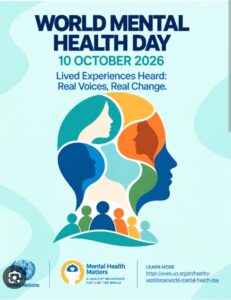
Nigeria marked the 2026 World Mental Health Day with a series of awareness campaigns, expert discussions and policy calls urging governments to improve access to mental healthcare, tackle drug abuse among young people and end stigma against people living with mental health conditions.
Observed annually on October 10, this year’s global theme, “Lived Experiences Heard: Real Voices, Real Change,” emphasised the need to involve people with personal experience of mental health conditions in shaping policies, treatment and support services.
Ahead of the commemoration, the World Health Organisation (WHO) called for greater involvement of people with lived experience in mental health policy and service delivery across Africa. It reported that nearly 150 million people in the region live with mental, neurological or substance-use conditions, while only seven of the WHO African Region’s 47 countries had comprehensively integrated mental health into primary healthcare.
In Nigeria, psychiatrists and other health experts raised concerns over inadequate funding, shortages of mental health professionals, high treatment costs and the limited implementation of the Mental Health Act, enacted nearly four years ago. The Association of Psychiatrists in Nigeria urged the Federal Government to implement and adequately fund the existing law, warning that fragmented services continued to place emotional and financial burdens on patients and their families.
During awareness activities in Abeokuta and Abuja on October 7 and 9, experts called for urgent government intervention, early diagnosis, improved hospital facilities and more community-based services. They also warned that stigma, misconceptions linking mental illness solely to spiritual causes and increasing substance abuse among young people often delayed professional treatment.
The fourth Vanguard Mental Health Summit, held in Lagos on October 9, focused on youth mental health and the effects of technology and social media. Experts advocated affordable treatment, school counselling, early intervention and stronger measures against cyberbullying and online content that glamorises drug use. The National Drug Law Enforcement Agency (NDLEA) reported that it had counselled, treated and rehabilitated 53,843 people through 31 rehabilitation centres nationwide over five years, while conducting 17,213 drug-prevention outreach programmes.
On October 10, the WHO urged countries to shift from long-term institutional care towards community-based services that protect patients’ dignity, rights and independence. Its new guide highlighted the need for housing, healthcare, education, employment and family support to help people recover and reintegrate into society.
Across the country, stakeholders reinforced these calls. In Kaduna, the state government reported that mental health services had commenced at 23 Primary Healthcare Centres of Excellence. In Abuja, the Vanguard Against Drug Abuse (VGADA) urged greater inclusion of people with lived experience in awareness campaigns and treatment decisions. Residents of Lokoja also called for greater empathy, supportive relationships and improved public understanding of mental health.
Experts further stressed that mental healthcare should be integrated into primary healthcare centres, schools and workplaces, supported by trained personnel, affordable medicines, insurance coverage and reliable referral systems. They warned that untreated mental health conditions and substance abuse could undermine education, productivity, family relationships, social trust and national development.
The week’s activities concluded with a common message that Nigeria must move beyond awareness campaigns to practical action by implementing existing mental health policies, increasing investment, expanding accessible services and ensuring that people experiencing mental health difficulties receive timely, compassionate and stigma-free care.
