
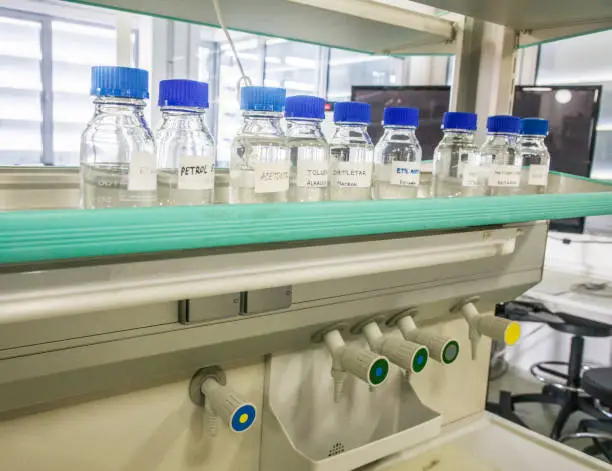
A July 2026 assessment by professional services firm KPMG found that more than 90 per cent of the active pharmaceutical ingredients (APIs) and excipients used by Nigerian pharmaceutical manufacturers are sourced externally.
This dependence exposes local manufacturers to foreign exchange fluctuations, international supply disruptions and rising production costs, raising questions about how quickly Nigeria can achieve its target of producing 70 per cent of its essential medicines locally.
The Federal Government introduced incentives, including zero customs duties and other tax exemptions on specified pharmaceutical manufacturing machinery and production inputs, to encourage domestic production.
The Nigeria Customs Service announced on March 26, 2025, that eligible pharmaceutical manufacturers would benefit from exemptions on import duties and VAT on qualifying active pharmaceutical ingredients, excipients and other essential production materials for two years.
Speaking on the sidelines of the Pharmaceutical Society of Nigeria's 99th Annual National Conference in Awka, Anambra State, on Friday, Suresh Nair, General Manager, Institutional Business at SAM Pharmaceutical Limited, commended the government for the incentives.
Nair said the removal of customs duties on specified machinery and production inputs had encouraged local manufacturing, expanded production capacity and created employment opportunities.
He argued that producing medicines locally would also reduce pressure on foreign exchange and keep more money circulating within Nigeria instead of transferring economic benefits to countries supplying imported medicines.
SAM Pharmaceutical, which marked 55 years of operations in 2026, recently commissioned a new manufacturing facility in Ota, Ogun State.
The facility, according to the company, has the capacity to produce more than 400 million tablets, 50 million capsules, two million bottles of liquid formulations and one million sachet products monthly.
The expansion represents an example of growing investment in domestic pharmaceutical manufacturing, although installed production capacity does not necessarily translate into actual output.
Meanwhile, the National Agency for Food and Drug Administration and Control (NAFDAC) reported in May 2026 that more than 70 per cent of products covered by its 5+5 localisation policy were being manufactured locally.
The agency said 185 pharmaceutical factory-layout applications had received approval as of March 2026, but only 53 facilities had completed construction or retrofitting.
NAFDAC explained that the 5+5 policy, introduced in 2019, requires manufacturers of selected medicines to establish local production facilities or partner with existing Nigerian manufacturers instead of relying indefinitely on imports.
Despite the reported progress, the continued dependence on imported pharmaceutical ingredients presents a major obstacle to achieving genuine self-sufficiency.
The challenge was also highlighted at a stakeholder meeting organised by Nigeria Health Watch in partnership with the World Bank Group in Abuja on October 30, where participants called for accelerated domestic production of active pharmaceutical ingredients.
The pharmaceutical industry's progress also comes against the background of wider concerns about drug security.
At the ongoing PSN conference, the society called on the Federal Government to declare pharmaceutical insecurity a national security threat, citing counterfeit medicines, drug diversion and illicit trafficking.
The developments raise important questions about the sustainability of Nigeria's pharmaceutical manufacturing ambitions.
Can the country achieve 70 per cent local medicine production while depending on foreign suppliers for more than 90 per cent of its active pharmaceutical ingredients and excipients?
More importantly, have the government's incentives translated into cheaper medicines for ordinary Nigerians, or are the benefits largely reflected in manufacturers' reduced production costs?
The ultimate test of the policy will not be the number of companies praising it or factories announcing new production capacities, but whether Nigerians can access affordable, quality medicines without the country remaining vulnerable to foreign supply disruptions.
