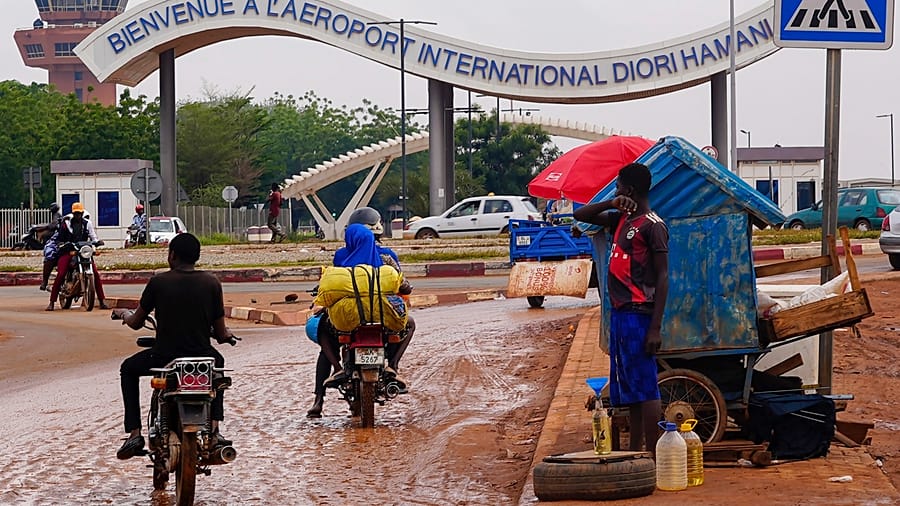
Mutinous soldiers attacked a military base and moved against strategic sites in Niamey before loyalist forces restored order.
Niger's military government says it has regained control of a key airbase in Niamey after mutinous soldiers launched an uprising that sparked gunfire and explosions across parts of the capital.
The unrest began early Saturday, August 29, around Base 101, an important Nigerien military facility attached to the main international airport in Niamey, strategically significant because it supports military operations and close to key government installations, including the presidential area.
Gunfire was also reported near the presidential palace and other government facilities.
Niger's Defence Ministry said soldiers had broken ranks and attacked strategic locations before loyalist forces moved to contain the rebellion.
By Sunday, authorities said Base 101 had been retaken and the situation was under control.
Reuters reported that hundreds of discontented soldiers were involved and that Russia's Africa Corps was called in to assist Nigerien forces. The Associated Press reported that dozens of soldiers were killed or arrested.
The government has not released a full casualty figure.
What sparked the mutiny?
The immediate cause remains unclear but reports point to growing frustration among soldiers over Niger's worsening security situation.
The country continues to battle jihadist groups linked to al-Qaeda and Islamic State, particularly in areas bordering Mali and Burkina Faso. Troops have suffered heavy casualties in the fighting.
The revolt is therefore significant because the soldiers were challenging the same military government that came to power promising to restore security.
General Abdourahamane Tiani seized power in July 2023 after overthrowing President Mohamed Bazoum. Since then, Niger has cut much of its military cooperation with Western countries, particularly France, and strengthened its relationship with Russia.
Russia's Africa Corps reportedly helped Niger's loyalist forces suppress the mutiny. The development underlines Moscow's growing military influence in the Sahel following the withdrawal of Western forces. Niger, Mali and Burkina Faso have also formed the Alliance of Sahel States after leaving ECOWAS.
Should Nigeria be concerned?
The crisis is of direct interest to Nigeria because Niger shares a long border with the country and remains an important security and economic partner.
Instability in Niger could worsen cross-border crime, arms trafficking, smuggling and the movement of armed groups, particularly around Nigeria's northern border states.
The two countries have also had strained relations since the 2023 coup. Nigeria, under ECOWAS, imposed sanctions on Niger and pushed for the restoration of constitutional rule before the regional bloc eventually moved towards diplomacy.
A prolonged crisis in Niamey could further complicate regional security cooperation.
For now, Tiani's government appears to have survived the mutiny but the revolt exposes a serious problem, the insecurity that helped bring the junta to power is now contributing to discontent within its own military.
Whether the government can contain that discontent while defeating the jihadist threat may determine how stable Niger remains in the months ahead.