
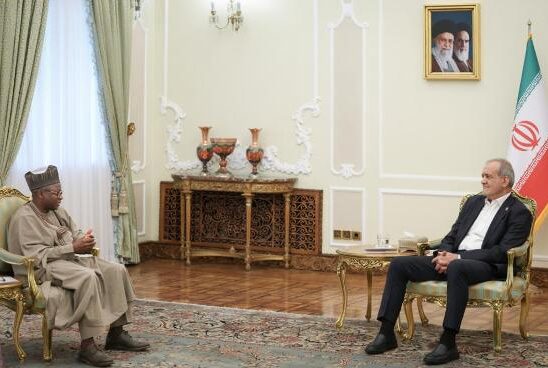
According to a statement issued by Nigeria's Ministry of Foreign Affairs on November 13, Pezeshkian expressed interest in exploring new opportunities for bilateral cooperation. Sallau identified trade, agriculture and healthcare as priority areas and urged both countries to prioritise the Nigeria-Iran Joint Commission as a platform for practical partnerships.
However, the renewed diplomatic push comes against the background of Iran's religious and ideological activities in Nigeria, particularly its relationship with the Islamic Movement in Nigeria (IMN), led by Sheikh Ibrahim El-Zakzaky.
Nigeria's 2022 National Inherent Risk Assessment of Proliferation Financing identified Iranian support for the IMN as a potential security concern. It warned that religious organisations and associated individuals could potentially serve as intermediaries for prohibited financial activities.
The IMN has also had repeated confrontations with Nigerian security agencies. In July 2019, following protests in Abuja, the Federal Government proscribed the organisation after a Federal High Court declared its activities illegal and terrorist in nature.
Earlier, a military operation in Zaria in December 2015 resulted in the deaths of hundreds of IMN members. Subsequent human rights investigations criticised the military's use of excessive and disproportionate force.
Iran's religious engagement in Nigeria extends beyond Shia organisations. Its religious institutions also have relationships with Nigerian Sufi figures, including Sheikh Dahiru Usman, as part of broader efforts to expand religious and ideological influence among Muslim communities in Africa.
Beyond these religious connections, Nigeria and Iran have maintained bilateral agreements covering petroleum, trade, banking, agriculture, energy and technical cooperation, some dating back to 1995 and 2001. Yet the current discussions about expanding cooperation and reviving the Joint Commission raise questions about how effectively previous agreements were implemented and what tangible benefits they delivered.
The proposed partnership also requires scrutiny in view of international sanctions against Iran. Any banking, investment or commercial arrangements must be carefully examined to prevent Nigerian institutions and businesses from becoming exposed to prohibited transactions.
Iran's interest in stronger relations with Nigeria is not inherently objectionable. However, the pursuit of diplomatic and economic cooperation should not come at the expense of national security, financial safeguards or a clear understanding of the implications of foreign religious and ideological influence.
