
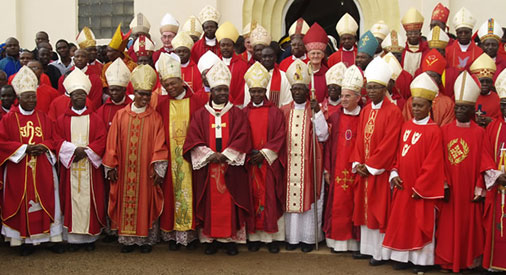
Catholic bishops have urged the National Assembly and Federal Government to stop further consideration of the proposed Foreign Aid (Regulation, Transparency and Disclosure) Bill 2026.
They made the call in a communiqué issued after their Second Plenary Meeting, held from September 10 to 18 at the Our Lady and St. Kizito Pastoral Centre, Oke-Gada, Ede.
The bishops said some provisions of the bill could give government officials too much power over religious, charitable and humanitarian organisations.
They support financial transparency but oppose provisions that could allow registration or renewal to be denied if an organisation is considered not to be acting in the “national interest.” They said this could increase government discretion and affect the independence of civic organisations.
But is the existing regulation enough?
Nigeria already has laws regulating non-profit organisations and incorporated trustees. Several government agencies also monitor financial reporting, money laundering and terrorist financing. However, registration does not mean every donation is examined. Annual returns provide information to regulators but may not show the source of every foreign donation, its final beneficiary or how it was spent.
This therefore raises a key question of whether Nigeria's current system provide enough oversight of foreign funds received by religious and charitable organisations.
There are legitimate concerns about the misuse of foreign funds.
In 2021, authorities in the United Arab Emirates convicted six Nigerians over a financing network that transferred $782,000 from Dubai to Boko Haram. The case highlighted the importance of tracing international financial transactions. Also, some religious organisations with operations in Nigeria have also faced scrutiny and regulatory action by the UK Charity Commission over conflict of interests, financial management and governance issues.
International anti-money-laundering standards recognise that non-profit organisations can be misused for terrorist financing. Recommended safeguards include checking donors, keeping proper financial records, reporting suspicious transactions and monitoring high-risk transfers.
A religious organisation can legally operate a school or other business. The key issue is whether funds raised for a particular purpose are properly accounted for and used in line with the organisation's legal obligations.
Transparency and government power
Organisations receiving foreign funds can reasonably be expected to maintain proper financial records and account for how the money is used. At the same time, transparency does not necessarily justify excessive bureaucracy, unnecessary disclosure of donors or broad government powers over independent organisations.
A balanced system could require organisations receiving significant foreign funding to disclose the source and purpose of funds, keep auditable records, conduct checks on donors and partners, report suspicious transactions and account for how the money is spent.
However, a separate concern arises if state officials can deny registration or renewal because they consider an organisation's activities contrary to an undefined “national interest.”
Civil-society groups have also raised concerns about the bill. While supporting transparency and accountability, they have warned that broad regulatory powers could give government excessive influence over independent organisations.
The proposed legislation, SB.1034, was introduced in the Senate in 2026. It passed its first and second readings and was referred for further legislative consideration. It had not become law as of September 2026. At its heart, the debate is about trust and power. Nigeria must be able to follow the money without controlling the conscience. Good regulation should protect the public without weakening the freedoms it exists to protect.
