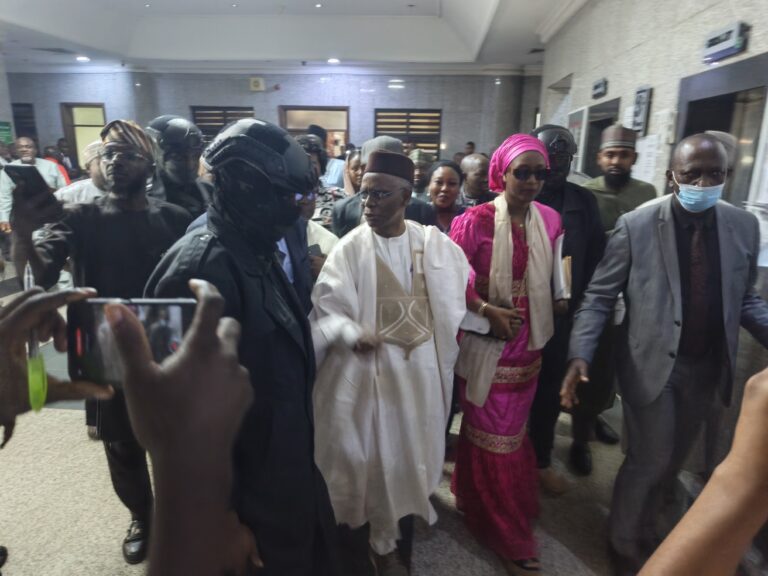
El-Rufai, who opened his defence at the Federal High Court in Abuja on Wednesday, November 25, denied tapping Ribadu's telephone or instructing anyone to do so, describing his comments as political rhetoric rather than an admission of criminal conduct.
During the interview, El-Rufai had said "He made the call because we listened to their calls," suggesting that someone had intercepted Ribadu's telephone conversation and passed the information to him.
The DSS relied on the recorded interview, admitted as Exhibit B, as a central piece of evidence in its case.
The agency called two witnesses before closing its case in June. One was a DSS operative identified as APC, while the other was lawyer and human rights activist Deji Adeyanju, who was present at the television studio during the interview.
Adeyanju confirmed hearing El-Rufai make the statement and testified that the recording reflected what happened. However, under cross-examination, he acknowledged that El-Rufai did not expressly say he personally tapped Ribadu's telephone.
The prosecution argued that the interview contained an admission sufficient to require the former governor to answer the allegations.
On October 26, Justice Joyce Abdulmalik rejected El-Rufai's no-case submission, ruling that the DSS had presented sufficient evidence to warrant him entering a defence.
Opening his defence, El-Rufai told the court that he had never owned telephone interception equipment, lacked the technical knowledge to operate it and had no access to Ribadu's communication networks or devices.
Explaining his use of the word "we", he said he was referring to opposition politicians.
"When I said 'tapped', it was an embellishment intended to make the government feel the pain we are feeling," he said, describing the remark as political exaggeration.
El-Rufai also claimed that a mutual friend had overheard Ribadu instructing security operatives to ensure his arrest and subsequently informed him. He declined to identify the individual, saying doing so could expose the person to danger.
The prosecution's publicly reported evidence, however, has not identified who allegedly intercepted Ribadu's communications, the equipment used or any forensic examination linking El-Rufai to the alleged operation.
These unanswered questions make the distinction between admitting that intercepted conversations were discussed and proving personal involvement in the interception particularly important.
The court has adjourned the trial until February 15 and 16, 2027, for continuation of the defence. El-Rufai has pleaded not guilty and remains entitled to the presumption of innocence.