
But the announcement has raised questions among Nigerians about what the technology will monitor, how it will identify misinformation and whether it could be used to silence legitimate criticism of the agency.
The Comptroller-General of Customs, Bashir Adeniyi, disclosed the initiative at the 2026 Nigerian Council of the Institute of Public Relations (NECCIPR) Roundtable in Lagos.
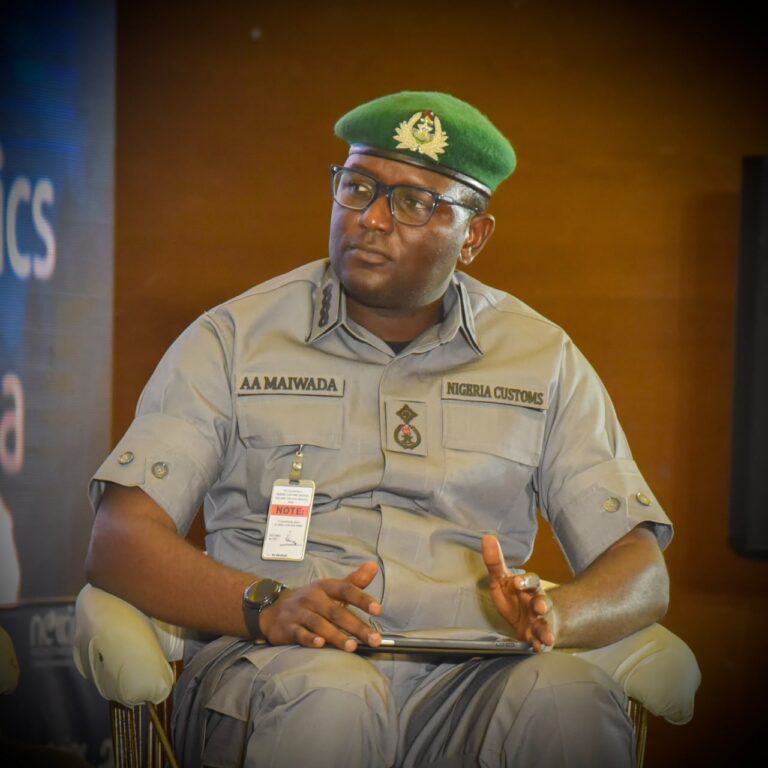
Represented by the Service's spokesperson, Deputy Comptroller Abdullahi Maiwada, Adeniyi said AI was already playing an important role in Customs operations, including risk management and strategic communication.
He explained that AI-assisted systems helped assess imported goods, classify them according to risk levels and determine appropriate Customs interventions.
The technology, he added, could analyse public sentiment and provide insights into Nigerians' perceptions of the agency's activities. Customs is also using digital platforms to establish facts and collaborate with relevant agencies to identify and apprehend those spreading misleading information.
The roundtable, themed 'Algorithm Influence and Public Relations', examined the growing influence of AI and digital technology on public communication.
Despite the announcement, the agency has not identified the specific AI software or digital intelligence platform it has acquired or developed. It has also not explained whether the proposed system is fully operational.
Nigerians interviewed by Clearpointa News want the agency to clarify whether the technology will monitor Facebook, X, WhatsApp, TikTok and other social media platforms.
They also questioned how Customs would distinguish deliberate misinformation from legitimate criticism and investigative journalism.
Other concerns include whether the system will automatically identify individuals or require independent investigations to establish their identities, and what safeguards will protect journalists, whistleblowers and citizens exposing alleged misconduct.
They further asked whether people wrongly identified as spreading misinformation would have a mechanism to challenge the findings.
The interviewees argued that protecting an institution's reputation must not become an excuse to suppress uncomfortable questions or criticism.
The agency's concerns are not without justification. Fraudsters have repeatedly impersonated Customs officers to advertise fictitious recruitment exercises and auction sales.
In November 2023, the Service warned Nigerians about fraudulent social media accounts impersonating senior officers and offering fake recruitment and auction opportunities.
In June 2025, Customs announced the arrest of Okoli Okana Boniface over an alleged attempt to manipulate its recruitment exercise while falsely claiming to be an aide to the First Lady, Senator Oluremi Tinubu.
The agency has also invested in technology training. In May 2025, it disclosed that more than 1,800 officers had received training in data analytics, risk profiling and artificial intelligence to improve intelligence-led operations.
However, there are concerns that AI can help identify suspicious accounts, detect fraudulent advertisements and trace the circulation of misleading information. But identifying a suspicious post does not automatically establish that it is false or that its author intended to deceive the public.
A journalist's investigation does not become fake news simply because it damages the reputation of a government agency. Equally, a citizen questioning the conduct of a Customs officer should not be treated as an enemy of the institution.
Customs must therefore explain how its proposed technology will be supervised, how allegations will be independently verified and how individuals wrongly flagged by the system can seek redress.
The agency has a legitimate responsibility to protect Nigerians from online fraud. But it also has a responsibility to remain open to public scrutiny.
