
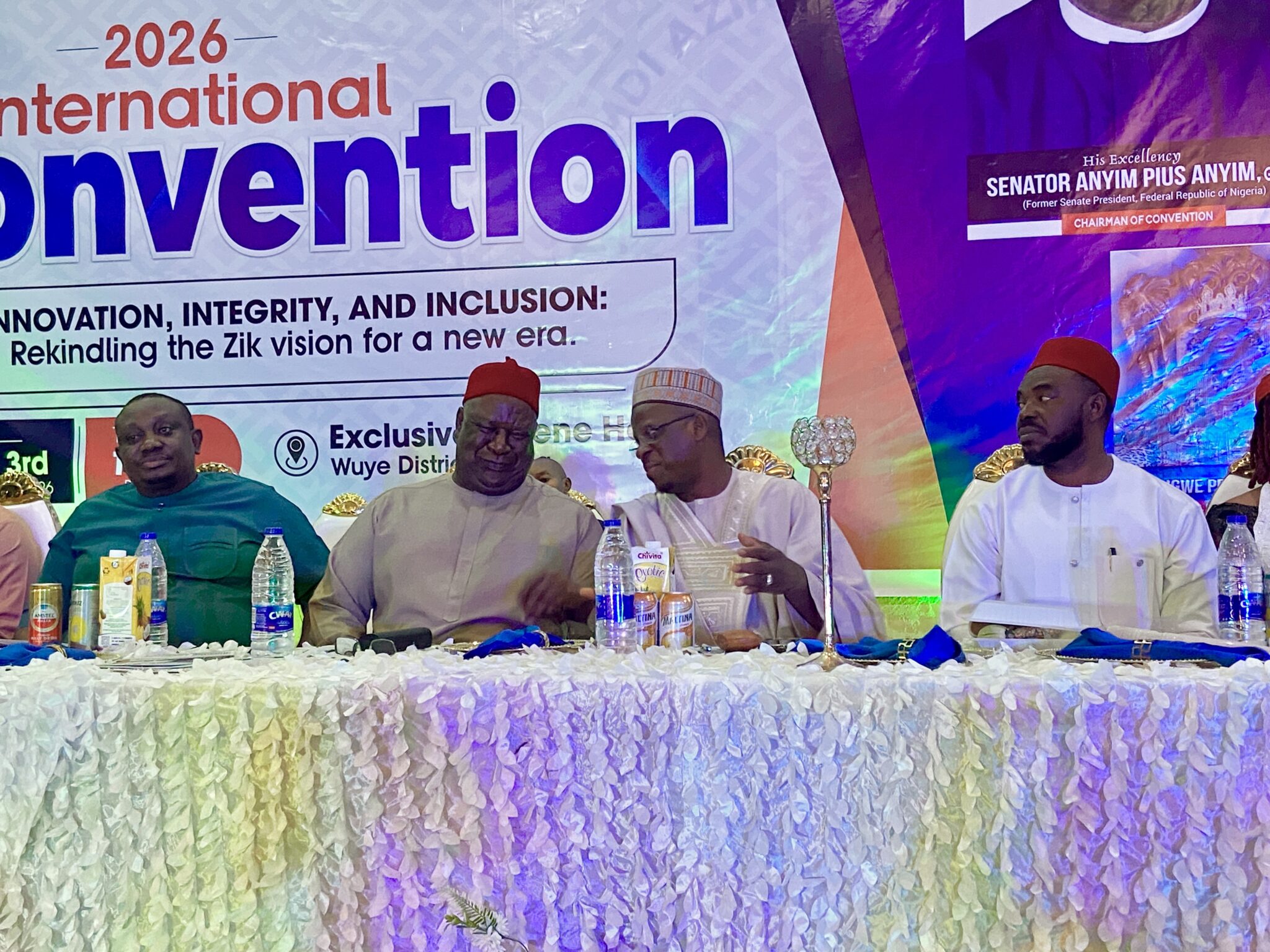
As Nigeria embraces artificial intelligence and other new technologies, a question raised at a recent gathering in Abuja deserves attention: who is benefiting from these changes, and who is being left behind?
Former Senate President Anyim Pius Anyim raised the concern at the 2026 International Convention of the Nnamdi Azikiwe University Alumni Association.
He warned that advances in artificial intelligence, robotics and other technologies should improve people's lives rather than increase inequality.
The concern is important because millions of Nigerians still struggle to get reliable internet access or afford smartphones and data.
A 2025 survey by the GSM Association found that 61 per cent of people in urban Nigeria used mobile internet, compared with only 28 per cent in rural areas. Internet-enabled phones were also much less common in rural areas.
This means that while some Nigerians are already using AI for work, education and business, others may not even have the internet access needed to benefit from it.
Students face a similar problem. A student who can afford a laptop, internet data and AI tools has advantages that may not be available to another student who depends on a basic phone or struggles to buy data.
Workers could also be affected as companies begin using AI to perform some tasks. The question is whether workers will be given opportunities to learn new skills before some jobs change or disappear.
For people living in rural communities, the challenge is even more basic: can they get a reliable internet connection in the first place?
The issue also puts the spotlight on Nigeria's telecom companies. Nigerians are paying more for calls and data, while many still complain about the cost and quality of internet access.
The Nigerian Communications Commission approved tariff increases of up to 50 per cent in January 2025, saying operators faced rising costs and that the increases would support investment in better networks and wider coverage. But as consumers pay more, an important question remains: are they seeing enough improvement in the cost, reach and quality of internet services?
The question of internet access is not treated as merely a technology issue everywhere.
Finland became the first country to make broadband internet access a legal right, requiring telecommunications providers to ensure people could obtain a connection at an affordable price. Estonia has also taken a strong position on people's access to information through the internet.
Nigeria may not need to copy either country, but their experience raises a question worth considering: if internet access is increasingly necessary for education, work, business and participation in society, should affordable access be treated as an essential service rather than a privilege for those who can afford it?
And if Nigeria wants its people to benefit from AI and other technologies, can it afford to leave millions without the internet, devices and skills needed to participate?
